We were once told that evolution happens so slowly that no one can observe it happening. We used to be told that evolution takes millions of years. But today we’re told that evolution happens rapidly, and now we can watch it happen right before our eyes!
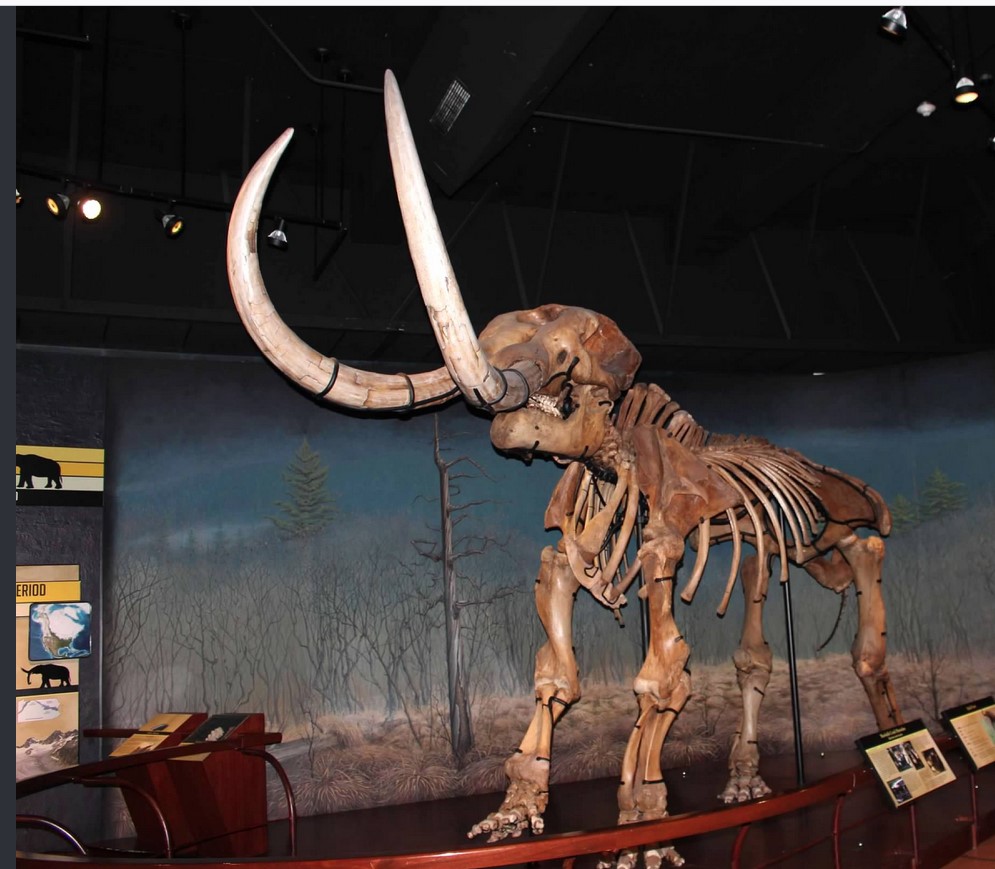
Consider this article from IFL Science. The headline states: “Want Modern Proof Of Evolution? Look At The Elephants Of Mozambique.” And the caption goes on to claim, “Ivory poaching during 15 years of civil war fired up the process of natural selection.”
The article concedes that “Evolution is often portrayed as an achingly long process, taking generations upon generations of small changes accumulating over a timeline too long to appreciate in a single, puny human lifetime.” So we were told that evolution was one thing, but now it’s something different. Evolution wasn’t observable, but now it is. What are we to make of this?
First, let’s ask some questions about evolution. What changed? Is the term ‘evolution’ being used consistently? Are natural selection and evolution the same thing? And what kind of sorcery is this?
I think the answer to these questions is the key to alleviating confusion. Did you notice how the author equates evolution with natural selection? Recognizing this helps us understand what evolutionists mean by evolution. First the author asks if you want proof of evolution, then proceeds to explain that the proof is natural selection. Natural selection, however, is not evolution. There’s a distinction.
Natural selection, in broad terms, is what happens from one generation to the next. It’s the way an organism adapts to its environment and survives. A dog’s fur may be thicker, straighter and coarser in an arctic environment (Alaskan Husky) but shorter and thinner in a desert environment (Chihuahua). So the environment impacts the kind of fur dogs have. But it has nothing to do with how mammals evolved fur in the first place- or if evolution is even possible. Fur on dogs already exists, so they’re not evolving fur. The fur simply changes based on necessity. Internal and external forces make this determination. Cold, heat, predators, food supply and competition are just a few things that impact how a dog’s fur is manifested.
This is how animals adapt to their environment, and it has nothing to do with evolution. It has to do with DNA and genetic coding. Dogs have the genetic code for fur, and the way their genes are passed along to their offspring determines how that population of dogs will appear in the future. No new information is being introduced into the genome, and no new body plans are being formed, nor are dogs evolving into a different kind of animal. So it’s inappropriate to refer to natural selection as evolution. Doing so only sow’s confusion. But maybe that’s intentional.
Evolutionists go on to claim that natural selection is a ‘mechanism’ that drives evolution. But even if we accept their claim, then natural selection is not and cannot be the same thing as evolution. All natural selection can do is select from what already exists within the genome. Therefore, evolutionists should not equate evolution with natural selection, and they should not claim that natural selection proves evolution… because it doesn’t.
So this article wrongly claims that a decrease in the percentage of female elephants with tusks is an example of evolution. The author explains, “it’s possible to see the impacts of natural selection in just a few years – for example, throughout the 1980s in central Mozambique, ivory poaching acted as a potent evolutionary pressure that saw a dramatic rise of female African elephants born without tusks.”
Evolutionary pressure is just a fancy way of saying that certain factors increase or decrease reproductive success in a population. So ivory poaching impacted the percentage of female elephants born with tusks, which shouldn’t be surprising since the poachers were killing off the ones with tusks and leaving the others, which means the tuskless females are the ones reproducing, increasing the likelihood that their offspring will produce a greater number of tuskless females. Ta-da! No evolution needed.
Evolutionists are trying to convince us that this is an example of evolution. And if they can get us to agree, then, according to their logic, evolution is true. And if evolution is true, then we should also believe that fish evolved into amphibians, dinosaurs evolved into birds, and apes evolved into people, and it proves that all life is related to a single common ancestor. See how this works?
But there are many problems with this line of reasoning. For one, it’s illogical. Losing tusks is not the same thing as evolving tusks. Pointing to a female elephant without tusks doesn’t explain where the genetic information for tusks came from in the first place. The genetic code already exists, and has existed for as long as elephants have been around.
A mutation or variation within the genome could prevent tusks from growing, but, nonetheless, the genetic information for tusks already exists. But how did that information get there? How did it evolve from an ancestor without the genetic code for tusks? These are the real questions we need to ask evolutionists, and the research in this article has nothing to do with that. They need to not only explain a step-by-step process, but provide verifiable, observational, empirical evidence that can be tested via the scientific method before touting evolution as fact.
A bigger problem is that these elephants are still elephants. They didn’t evolve into something else. This may sound silly, but it’s worth stating that elephants are not evolving the ability to climb trees (like apes), become amphibious (like whales) or fly (like birds). There’s no evolution happening at all.
This article is emblematic of modern evolutionary theory, which seeks to indoctrinate people by using deceptive practices, like the bait-and-switch employed here. They point to natural selection, call it evolution, then claim that proves evolution, inferring that all living organisms must, therefore, be related to a single common ancestor.
But if we take the time to analyze the details, we find that evolution is just smoke and mirrors. The truth is that elephants reproduce after their kind and always have. Some elephants have tusks. Some don’t. So, while the study is interesting, it does not support evolution. In fact I’d suggest it better supports biblical creation, where God created animals to reproduce after their kind.
Part II will continue to breakdown this article, critiquing more evolutionary myths associated with it.
 sixdaysblog