Evolution is often presented as a neat and tidy explanation for origins, and it leaves no room for skepticism. Yet when we closely examine the evidence, that confidence quickly unravels. A recent article from Discover Magazine tells us, “This 260-Million-Year-Old Reptile Fossil Is Reshaping the Story of Turtle Evolution.”
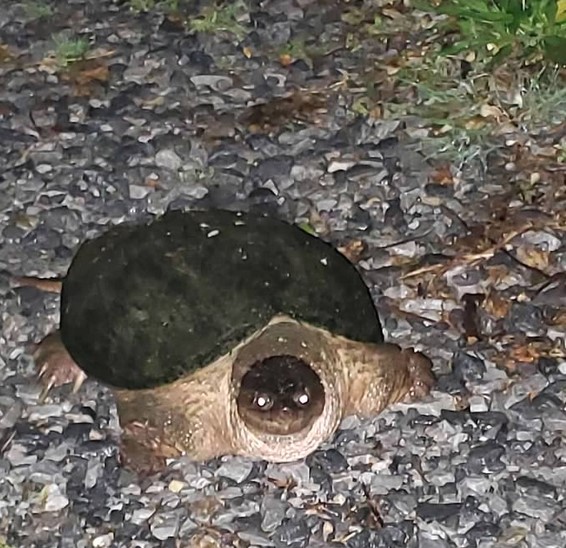
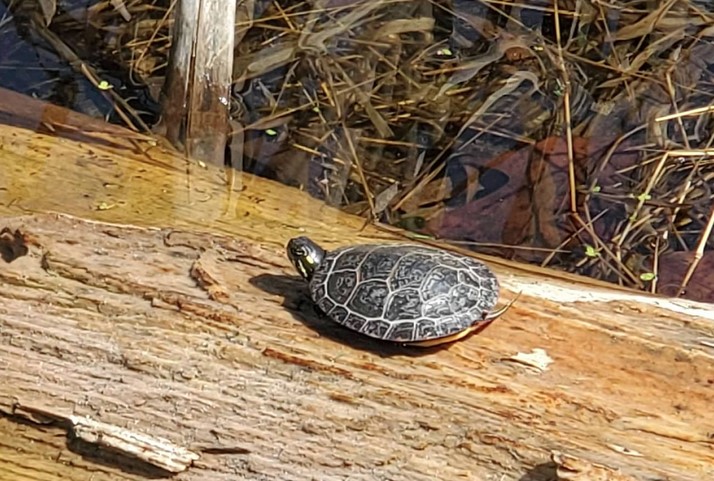
If the evolutionary story were truly solid, why does it need constant reshaping? The reality is that turtle evolution has always been a problem for the theory. There is no clear transitional series showing how a non-turtle reptile gradually became a turtle. Instead, fully formed turtles with complete shells appear abruptly in the fossil record around 215 million years ago. After that, we see remarkable stasis with no evolution.
The article highlights a 260-million-year-old Permian reptile called Eunotosaurus africanus. For nearly two decades, evolutionists hailed it as a critical “missing link”- a creature supposedly in the process of evolving a shell. It was proudly displayed as proof that turtle shells evolved gradually from reptile ancestors. Textbooks, museums, and popular science articles used it to reinforce the idea that evolution was an undisputed fact.
Then reality intervened. A recent study in Current Biology concluded that Eunotosaurus wasn’t an ancestor of turtles at all. It belonged to a completely different lineage. Oops.
This wasn’t even new information. A 2021 study in Palaeontologia Electronica had already reached the same conclusion- something I wrote about in 2022. The 2026 study simply confirms what careful observers already knew.
What’s revealing is how the Discover article frames this reversal. It states that for nearly two decades, Eunotosaurus “sat near the base of the turtle family tree, offering one of the earliest clues to how turtles began evolving their shells.” But if the creature wasn’t even in the turtle lineage, how exactly was it offering clues about turtle shell evolution? This is how indoctrination works.
The article now pivots to “convergent evolution”- the idea where organisms share similar features but are not directly related. If evolutionists can’t make the data fit their narrative, they try again, inventing a new plot device. Now they claim that turtles are more closely related to archosaurs (crocodiles, birds, and dinosaurs) and that the turtle lineage split off later in the Permian. But notice the language: the turtle lineage “likely” split… “before diversifying through the Triassic Period…”
These are not observations. They are assumptions stacked on assumptions. The author even admits that long-standing conflicts between genetic and fossil evidence “may not have been a true contradiction after all”- it was just one fossil “sitting in the wrong place on the turtle family tree.” In other words, the evidence is being rearranged until it fits the evolutionary framework.
This pattern is consistent: evolutionary theory is not following the evidence wherever it leads. It is forcing the evidence into a pre-existing naturalistic story. When one prop fails, another is quickly substituted. Evolutionary speculation remains the hero. Just change the interpretation.
The article suggests that, free from the distraction of Eunotosaurus, researchers can now focus on the “right path” for turtle origins. Yet there’s good reason to doubt they’re on any better track. Turtles appear fully equipped with their complex shells. No one has ever observed environmental pressures transforming a shell-less reptile into a fully shelled turtle. If environmental pressures are so powerful that they can trigger a complex structure like a turtle shell over millions of years, why don’t we see this process working today? And if a shell-less ancestor survived perfectly well for millions of years, why would it need to invest enormous energy evolving a shell in the first place? There’s no evidence for these large-scale changes, and there’s no logic.
The biblical explanation offers a far more straightforward account: God created animals according to their kinds, complete and functional from the beginning. Fully formed turtles with shells make perfect sense in that framework. The fossil record’s pattern of sudden appearance and stasis aligns naturally with creation, not with the endless tinkering required by evolution. There’s no evidence demanding an evolutionary explanation.
The good news for evolutionists, according to the author, is that now that turtle evolution is no longer obscured by the wrong reptile, now they can focus on the right path! But I would argue that they’re going down another wrong path because turtles didn’t evolve from a shell-less ancestor in the first place. I’d suggest that the Bible’s explanation for the origin of life is correct. God creating animals according to their kinds makes more sense than blind, natural processes.