There is no secular explanation for the origin of life, yet some scientists continue proposing new scenarios. Even before the famous Miller-Urey experiment in 1953, researchers were debating what Earth’s early atmosphere might have looked like and were conducting experiments in hopes of creating the supposed “building blocks” of life.
But the thing is, nobody knows what this theoretical early Earth actually looked like, and they certainly don’t know which elements were present when these alleged building blocks formed. That is still under debate today. Yet many evolutionists will take a victory lap over articles like this one published by Phys.org.
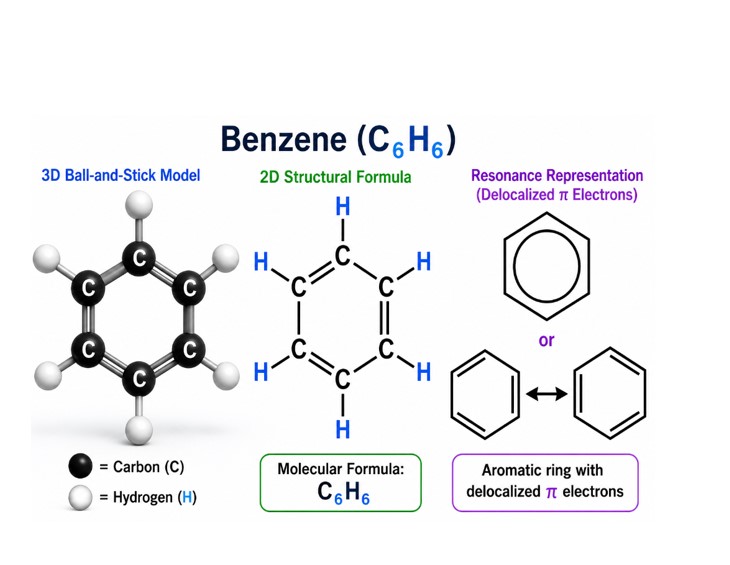
Here’s the headline: “Benzene reaction may explain how DNA and RNA building blocks formed on early Earth.”
My reaction is, “Really? So what?”
Just because evolutionists think they have found a possible solution doesn’t mean their proposal has anything to do with reality. I could come up with a convincing explanation for why Joe robbed a bank. But if Joe is innocent and never robbed a bank, then what good is my explanation? The explanation only matters if Joe actually committed the crime. Otherwise, it’s fiction. And I would place this article in the category of science fiction.
The article continues with the phrase, “Possible scenario in the early Earth atmosphere.” Ho-hum. How many times have we heard of possible scenarios before? Too often.
So, theoretically, in order for life to arise naturally and spontaneously, the building blocks of life must have been present at some early point in Earth’s history. Everything would need to be just right. The Earth’s surface would have to cool from its molten state. Abundant water would be required. An atmosphere capable of retaining essential gases would be necessary. Then, according to the article, more than 3 billion years ago the right conditions supposedly existed. The Goldilocks Zone!
Working backward, the researchers began with molecules found in DNA and RNA known as nucleobases: adenine, thymine, guanine, cytosine, and uracil. Going back another step, they proposed that nitrogen, carbon dioxide, and methane were needed to produce these molecules. But one compound stood out- benzene. The researchers reasoned that benzene could provide a pathway for nucleobases to form. And there was much rejoicing! Yay.
Okay, now back to reality.
All of this is entirely theoretical. And both the researchers and the article’s author know it. They now want to determine whether these reactions can be reproduced in a laboratory. That’s fine. But making something happen in a laboratory is not the same as demonstrating that it happened naturally in the wild. A successful laboratory experiment would only demonstrate that intelligent design was the missing ingredient… to carefully control the conditions and direct the process.
So let me know when a new life-form naturally emerges from non-life, and then I’ll get excited. Until then, what good is an explanation that doesn’t conform to reality? In the meantime, I’ll stick with God’s recent special creation as the best explanation for the universe and for life itself. Life always comes from life. No exceptions.
 sixdaysblog