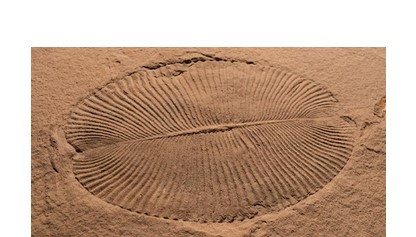
Here’s an article promoting evolution based on research from a Canadian fossil site. The headline from SciTechDaily declares, “567-Million-Year-Old Fossils Suggest Animals Evolved Earlier Than We Thought.”
The purpose of this post is to expose the evolutionary bias behind this study and offer a creationist perspective. The headline assumes evolution from the outset and presents it as an established fact. Of course, I don’t expect these publications to be fair or balanced, or to acknowledge their own assumptions and biases. But it’s still worth examining the weaknesses of evolutionary claims, especially when presented in the name of science.
The first thing that stands out is the ever-changing evolutionary timeline. According to the headline, evolutionists were wrong about when these animals supposedly evolved, so now the story has to be revised. Evolutionists often praise science for being self-correcting, but they often forget that their original timeline was never an indisputable fact to begin with. If they truly appreciated how speculative evolutionary history is, they wouldn’t object when people question it or consider alternative explanations that better fit the evidence.
Once again, the origin of animal life has been pushed farther back in time. This is a common pattern. As new discoveries are made, the timeline keeps expanding in an effort to make evolution seem more gradual. Yet the fossils themselves still reveal remarkable diversity. Many of these organisms look nothing alike. They display distinct body plans and appear abruptly in the fossil record. Where, then, is the evidence for the countless transitional forms evolution demands?
The article states, “How all of these animals evolved from earlier, simpler ancestors is one of the most exciting stories in the history book of life on our 4.5 billion-year-old planet.” Notice there is no discussion of whether evolution actually happened. It is simply assumed and treated as fact. And they want their readers to be excited about it! A little indoctrination effort, maybe?
The author calls this discovery “crucial” to the story of evolution. Naturally. Nonetheless, I find the next comment crucial: “Long before life on land or even fish, Earth’s seafloor was home to large and complex animals.“ Even within their own timeline, animal life was already large and complex 567 million years ago. That raises an obvious question: why do complex body plans appear so suddenly? Evolution is supposed to explain complexity arising gradually, yet the fossils continue to reveal complexity from the beginning. Evolutionists don’t believe in magic, per se, but the lack of detail is mysterious.
The researchers focused on the Ediacaran Period, dividing it into three broad assemblages- the Avalon, White Sea, and Nama. These are described as distinctive communities that “appear” at different times and in different environments. Sounds magical. The organisms simply appear. Therefore, in an attempt to smooth over these abrupt appearances, the study aims to tell a more “gradual story” that is more appealing.
The authors argue that early animal communities changed from deep-water environments to more diverse shallow-water ecosystems. But changing environments does not demonstrate common ancestry. Today we observe organisms adapting to different habitats, yet we never observe entirely new, complex body plans evolving as a result.
The researchers dated these fossils to 567-566 million years ago and suggest they resemble fossils from the later White Sea assemblage. From this combination of radiometric dating and anatomical resemblance, they infer a “gradual ecological expansion” in which animals were supposedly experimenting with new body shapes, lifestyles, movement, and feeding strategies.
But that conclusion depends entirely on their interpretation. If the dates are incorrect, if the similarities aren’t evolutionary relevant, or if the depositional environment has been misinterpreted, then the gradual evolutionary storyline quickly unravels.
A creationist interpretation is much simpler. These animals were created as distinct kinds and lived at the same time. They were already diverse from the beginning and were buried under different conditions during the global Flood, producing the fossil patterns we observe today.
The authors also suggest that environmental pressures drove changes in body shape, size, behavior, movement and feeding. Yet we don’t observe environmental pressures producing entirely new body plans today. Marine organisms adapt within their created kinds, but starfish don’t evolve into seahorses or jellyfish. Even according to evolutionary timescales, starfish have existed for hundreds of millions of years while remaining unmistakably starfish. Variation occurs, but molecules-to-man evolution does not.
Finally, the article describes evolution as “Nature’s Problem Solver,” as though evolution possesses intelligence and purpose. Because birds, bats, and insects all fly, we’re told evolution independently solved the problem of flight several times. But that’s an unwarranted assumption, not an observation. The existence of flight in different kinds of animals doesn’t demonstrate common ancestry. It points more naturally to purposeful design.
What evolutionists describe as nature being “uncannily inventive” is better explained by the work and design of an intelligent Creator. Instead of giving evolution the credit, we should give that credit where it belongs- to God.